





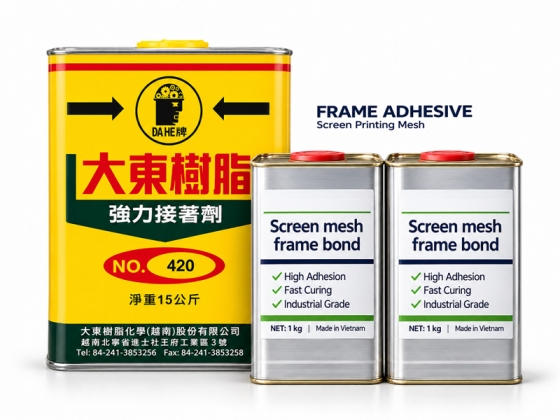
Screen printing mesh frame adhesive
- Strong mesh-to-frame adhesion
- Fast drying for efficient screen preparation
- Helps maintain mesh tension
- Suitable for aluminium and steel frames
Product details
Screen printing mesh-to-frame adhesive, also known as screen frame adhesive, bonds tensioned mesh to the frame surface. The bond holds the mesh in place after the frame is released from the stretching equipment, providing a foundation for subsequent emulsion coating, exposure and printing.
This screen printing frame adhesive provides strong adhesion and fast drying and is suitable for aluminium or steel frames.
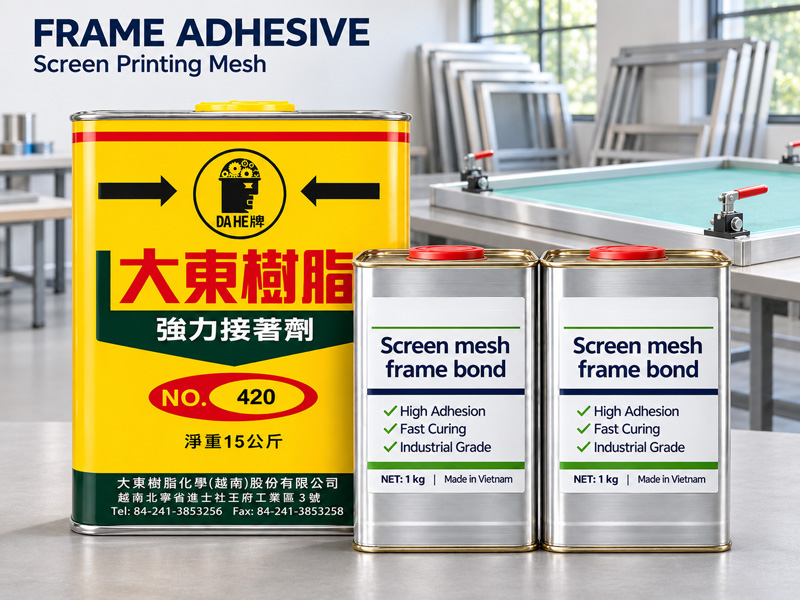
Key Features
1. Strong mesh-to-frame bonding
The adhesive forms a bond at the mesh-to-frame contact area, helping prevent edge lifting or mesh slippage when the screen is used under appropriate operating conditions.
2. Fast drying to support screen preparation
Fast drying helps reduce waiting time during mesh bonding. Follow the instructions for the specific adhesive grade to determine when the frame can be released from the stretcher or the screen put into service.
3. Helps maintain mesh tension
A stable bond helps secure the mesh to the frame and maintain the screen’s working condition. Actual mesh tension also depends on the mesh type, frame construction, stretching procedure and surface preparation.
4. Suitable for new screens and remeshing
Suitable for bonding mesh to new frames or remeshing existing frames that remain fit for use. For existing frames, remove unsuitable adhesive residue and inspect the bonding surface before rebonding.
Product Information
|
Item |
Information |
|
Product name |
Screen printing mesh-to-frame adhesive |
|
Function |
Bonding screen printing mesh to frames |
|
Suitable frame materials |
Aluminium or steel |
|
Properties according to the information provided |
Strong adhesion, fast drying |
|
Indicative packaging |
15 kg container |
|
Mixing ratio and curing time |
Follow the instructions for the specific adhesive grade |
The 15 kg size is the typical packaging information provided. Confirm the actual pack size on the product label.
Applications
▫ Bonding mesh during the preparation of new screen printing screens
▫ Remeshing used aluminium or steel frames
▫ Preparing screens for textile printing and other suitable screen printing applications
General Directions for Use
▫ Prepare the frame: Remove grease, dust and any old adhesive that is no longer firmly bonded. Prepare the surface according to the adhesive instructions, ensuring the frame is clean and dry before bonding.
▫ Prepare the adhesive: Check whether the product is a one-component or two-component adhesive. If a hardener or activator is required, use the correct type and mixing ratio specified by the manufacturer.
▫ Stretch and position the mesh: Stretch the mesh to the appropriate specifications and ensure even contact with the frame’s bonding area.
▫ Bond the mesh: Apply adhesive to the mesh-to-frame contact area using the recommended method. Keep adhesive out of the image area.
▫ Allow sufficient bonding time: Keep the frame and mesh stable until the bond has developed sufficient strength before releasing the stretching tension.
▫ Inspect: Check adhesion around the frame and remeasure mesh tension before proceeding to stencil preparation.
Selection and Usage Notes
Screen frame adhesives are available in different chemical systems. For example, SAATI offers both two-component polyurethane adhesives and one-component cyanoacrylate adhesives used with an activator. A single mixing ratio or curing procedure therefore cannot be applied to all frame adhesives.
Do not add solvents, hardeners or activators without the corresponding instructions.
When selecting an adhesive, check its compatibility with the mesh, frame and chemicals used during printing, cleaning and screen reclamation.
Do not substitute pallet adhesive for frame adhesive. These products serve different locations and bonding requirements.
Storage
Close the container tightly after use. Prevent contamination and do not allow mixed adhesive to enter the unmixed product.
Follow the product label and safety data sheet for storage temperature, shelf life and safety requirements.
