





5 factors to consider when choosing screen printing ink
A print may look great straight off the press but peel when scratched, crack when stretched or discolor after storage. To choose the right screen printing ink, identify the actual substrate, end-use requirements and production conditions before approving a sample. Here are five factors to check.
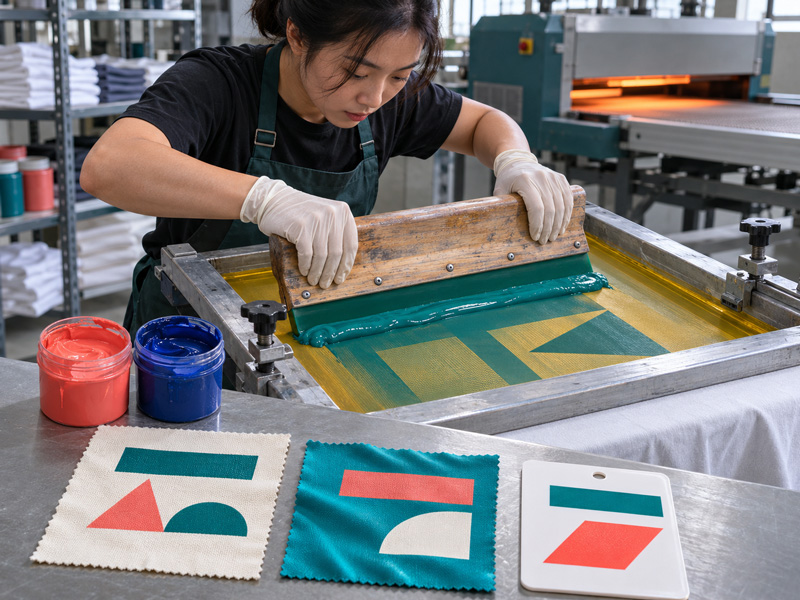
1. Substrate and surface condition
Start by checking the substrate against the list of compatible materials in the ink’s technical data sheet (TDS). For textile printing, identify the fiber content, dye color and any finishes, such as a water-repellent coating. For plastics, identify the exact polymer and check whether the surface has been treated or has an ink-receptive coating.
|
Substrate |
What to check when choosing ink |
|
Cotton |
Choose an ink formulated for cotton. Check coverage on dark fabric and the hand feel of the finished print. |
|
Polyester and polyester blends |
Check for dye migration into the ink film, especially on dark-dyed or sublimation-printed fabrics. |
|
Stretch fabrics and water-repellent coated fabrics |
Test adhesion on the actual side of the fabric to be printed and check how well the ink film stretches. |
|
PE and PP plastics |
Check the ink’s surface treatment requirements. Some ink systems require corona or flame treatment to achieve adhesion. |
|
Paper and paperboard |
Identify whether the stock is coated or uncoated. Run a print trial to check sharpness, coverage and rub resistance. |
|
Glass and metal |
Choose an ink compatible with the actual surface, such as coated glass or painted metal. Check the requirements for cleaning, surface treatment and hardener mixing. |
2. Durability under end-use conditions
Choose tests based on how the finished product will be used. For everyday garments, prioritize wash durability and rub fastness. For sportswear, also check how well the ink film stretches. For outdoor signage, assess weather resistance. For parts that are cleaned frequently, check scratch resistance and resistance to the cleaning agents that will actually be used.
On rigid substrates, a crosshatch tape test can be used to assess adhesion if the method suits the material and acceptance criteria. Test after the sample has met the ink’s specified curing conditions or completed the required conditioning period.
3. Coverage, color and print effects
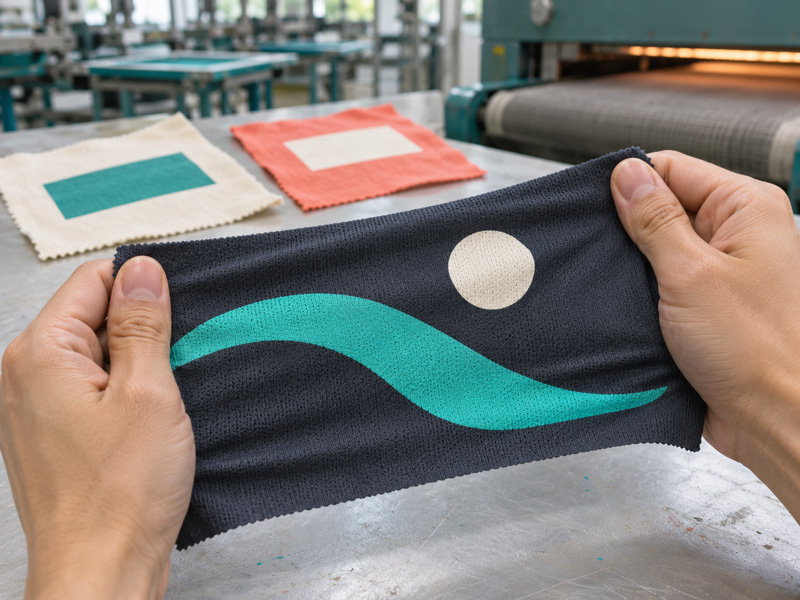
High-opacity ink reduces the influence of a dark substrate on light print colors. For multicolor prints on dark fabric, a white underbase can help the top colors reproduce accurately. If polyester is prone to dye migration, test a low-bleed ink or a compatible dye-blocking underbase. A white underbase improves coverage, while a dye-blocking underbase helps prevent dye from migrating into the print. For example, when printing a white logo on a red polyester shirt, check its whiteness after printing and look for pink discoloration after the sample has cooled and been stored.
Decide whether the print calls for a soft hand, gloss, sharp halftones or a raised effect. For metallic or glitter inks, match the particle size to the mesh opening and follow the ink manufacturer’s recommendations so the particles can pass through the mesh consistently.
4. Compatibility with the screen and press
Ink viscosity, mesh opening and stencil thickness affect how much ink is deposited on the substrate. Small text and halftone dots require a setup that preserves fine detail. Inks with effect particles and jobs requiring a thick ink deposit generally need larger mesh openings. When reading mesh specifications, check whether the count is given in threads per centimeter or threads per inch.
Choose a photo emulsion or capillary film that can withstand the ink system in use. With water-based inks, check whether the mesh openings stay clear when the press pauses. If you need to adjust viscosity or extend the ink’s working time on the screen, use the specified additive at the mixing ratio given in the technical data sheet.
5. Drying, curing and sample testing
Before choosing an ink, check whether your shop’s equipment can meet its drying or curing requirements. For water-based inks, check the airflow, temperature and time required for the specific formulation. For plastisol, verify that the ink film meets the required cure conditions as it passes through the dryer, using the actual ink film temperature. Flashing between layers sets the printed layer before the next color is applied. Verify the final cure separately.
For UV- or UV LED-curable inks, choose a UV source that meets the ink’s specifications, including wavelength where specified. For two-component inks, control the mixing ratio and pot life. These parameters can vary between ink systems, even when they are used on the same substrate.
Before starting a production run, print a sample on the actual substrate lot using the planned production setup. Approve color, coverage and sharpness after the sample has cooled. Then check adhesion, wash durability, stretch performance or dye migration as appropriate for the application. Keep the approved sample and record the ink code, mixing ratios, mesh specifications and dryer settings so the shop can reproduce the results on subsequent lots.
