





Hot stamping foil for textile screen printing
Available in a wide variety of colors and patterns, these foils are suitable for numerous fashion applications, including clothing, bags, accessories, and other textile products.
When transferred under appropriate processing conditions using the correct heat transfer procedures, the foils offer good durability and resistance to washing.
Korean-Made hot stamping foil for textiles and garments
Korean-made Hot stamping foils from Dongjin Foil are highly regarded by customers for their excellent quality, attractive colors, diverse designs, and wide range of available sizes, meeting various printing and decorative requirements for textiles and garments.
Basic structure of hot stamping foil
Hot stamping foils used in textile applications generally consist of multiple functional layers, each serving a specific purpose during the process of transferring the foil coating onto the fabric surface.
1. PET Base Film
A transparent PET (polyester) film that serves as the carrier substrate, supporting all the functional layers that make up the transfer foil.
2. Release Layer
A functional layer that enables the foil coating layers to separate consistently from the PET carrier film after the heat transfer process.
3. Color / Lacquer Layer
The layer responsible for determining the color and surface characteristics of the foil, contributing to the desired decorative effects.
4. Metallized Layer
In metallic transfer foils, this layer is typically produced through vacuum aluminum metallization or similar metal-coating processes, creating a brilliant metallic finish and distinctive light-reflective effects.
5. Transfer Functional Layer
A specially designed functional layer that bonds with the foil binder previously screen-printed onto the fabric surface, allowing the decorative foil layers to transfer from the PET carrier film to the designated areas under heat and pressure.
Foil transfer process for textiles
Step 1. Artwork Preparation
Prepare the artwork to be transferred and produce the corresponding screen-printing stencil according to the desired design.
Step 2. Screen Printing the Foil Binder
Use the screen-printing process to apply a specialized foil binder (foil adhesive) to the designated areas of the fabric where the foil is to be transferred.
Step 3. Drying the Foil Binder
Dry the printed binder layer under conditions appropriate for the technical characteristics of the foil binder being used.
Step 4. Positioning the Transfer Foil
Place the transfer foil onto the fabric with its transfer side in direct contact with the areas printed with foil binder.
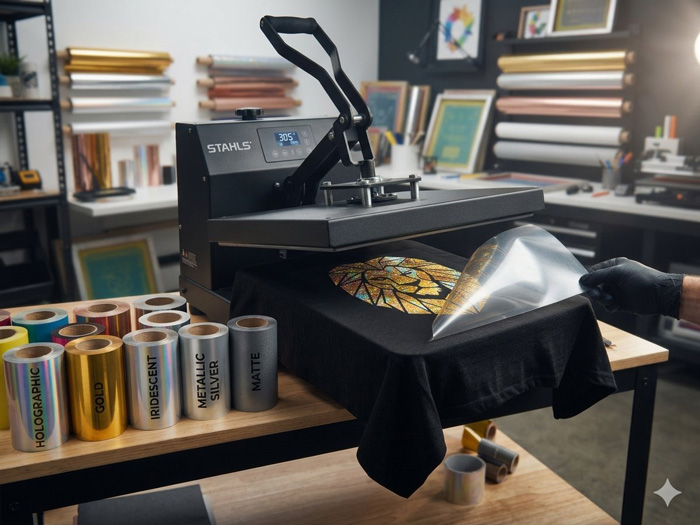
Step 5. Heat Transfer
Use a flat heat press or roller heat press to transfer the foil onto the fabric.
Adjust the transfer temperature, pressure, and dwell time according to the type of transfer foil, foil binder, and fabric being processed.
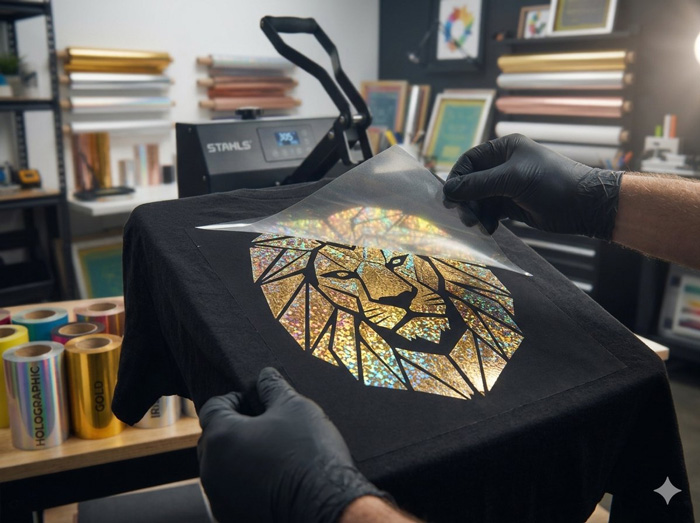
Step 6. Peeling Off the PET Carrier Film
After completing the heat transfer process, peel away the PET carrier film under the appropriate technical conditions.
The foil coating remains bonded to the areas previously printed with foil binder, forming decorative designs with the intended colors and metallic effects.
Common types of hot stamping foil
1. Metallic Hot stamping foil
Available in gold, silver, and a wide range of other metallic colors, these foils create brilliant, luxurious, and eye-catching metallic finishes on fabric surfaces.
2. Holographic Hot stamping foil
Produces multicolored optical effects, with colors and patterns that change depending on the viewing angle and direction of illumination, creating unique visual depth and distinctive decorative effects.
3. Matte Hot stamping foil
Features a low-gloss surface that produces a subtle, refined, and modern matte finish, making it suitable for designs that do not require high light reflectivity.
4. Patterned Hot stamping foil
Features pre-designed patterns, decorative motifs, or textured surface effects, allowing manufacturers to create distinctive and visually appealing fashion designs.
5. Colored Hot stamping foil
Available in a diverse range of colors, offering greater creative flexibility and enabling unique designs that differ from conventional metallic foil finishes.
Main applications
1. Clothing and Garments
Suitable for T-shirts, sweatshirts, hoodies, dresses, jackets, sportswear, fashion apparel, and traditional Korean clothing (hanbok).
2. Fashion Accessories
Used to decorate handbags, hats, footwear, and various other fashion accessories.
3. Home Textile Products
Applicable to decorative cushions, curtains, tablecloths, and various interior decorative fabrics.
4. Decorative Textile Screen Printing
Ideal for decorating garments and textile products with logos, lettering, graphic designs, metallic effects, and distinctive decorative accents.
Key advantages of hot stamping foil for textiles
1. Premium Decorative Effects
Hot stamping foils can produce brilliant metallic finishes and striking light-reflective effects that are difficult to reproduce using conventional water-based or pigment printing inks.
2. Extensive Design Possibilities
With a wide selection of foils, including gold, silver, colored, holographic, matte, and patterned varieties, these products provide creative flexibility for producing aesthetically appealing designs with distinctive styles.
3. High Production Efficiency
The combination of screen printing and heat transfer can be integrated into mass-production processes, meeting the requirements of textile printing and garment manufacturing businesses.
4. Enhanced Product Value
Adding foil effects to conventionally printed products enhances their visual appeal, creates distinctive decorative accents, and increases the commercial value of fashion products.
Important considerations for optimal foil transfer results
Foil transfer quality depends not only on the quality of the transfer foil itself but also on various factors throughout the production process, including:
- Fabric type: The fiber composition and properties of the fabric being processed.
- Foil binder: The characteristics of the adhesive and its compatibility with both the transfer foil and fabric substrate.
- Binder application amount: The amount of foil binder deposited onto the fabric surface.
- Screen mesh specifications: The screen mesh specifications used during the binder-printing process.
- Drying conditions: The temperature, duration, and method used to dry the printed binder.
- Heat transfer temperature: The temperature applied during the foil transfer process.
- Transfer pressure: The pressure applied to the transfer foil and fabric surface.
- Dwell time: The duration for which heat and pressure are maintained during foil transfer.
- Peeling temperature and method: The temperature conditions and method used to remove the PET carrier film after heat transfer.
When working with a new fabric material or changing the type of foil binder, pre-production testing is essential to determine the optimal foil transfer conditions before proceeding with mass production.
For garments and textile products that require washing during normal use, wash durability testing must be carried out before mass production to ensure that the finished products meet the required technical and quality standards.
