





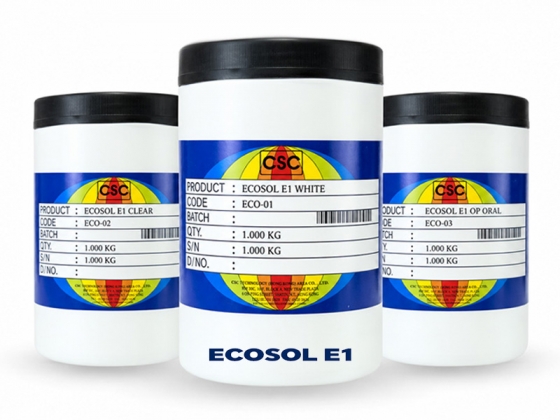
ECOSOL E1 Water-Based Screen Ink
- Soft hand feel and good elasticity
- Bright colors
- Excellent wash fastness
- Excellent rubbing fastness
Product details
ECOSOL E1 is a high-solids water-based screen printing ink formulated with thermoplastic acrylic resin. It contains no PVC, phthalates, or formaldehyde.
Developed as an acrylic emulsion ink with properties similar to plastisol ink, it produces strong, well-defined, vivid colors on light-colored fabrics.
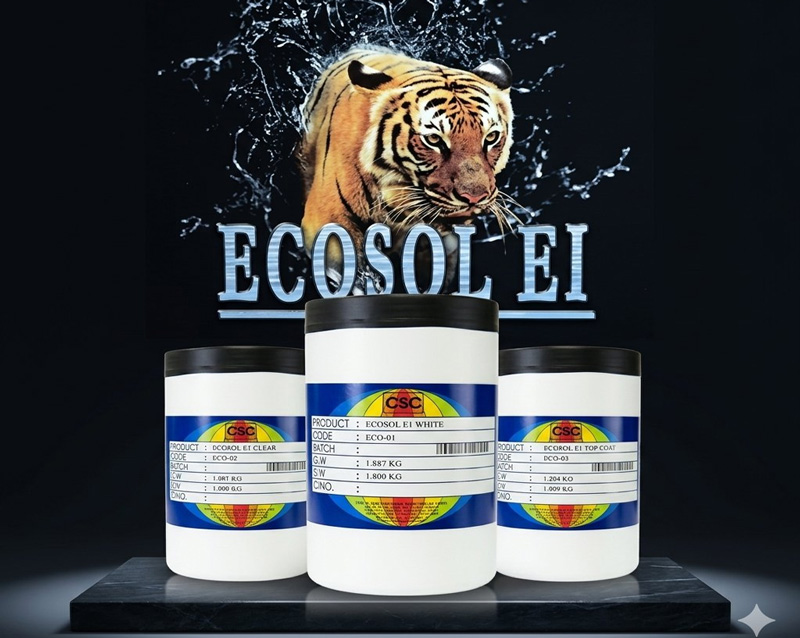
Key Features
▫ Soft hand feel and elasticity: Produces soft prints with good elastomeric properties.
▫ Excellent wash fastness: Helps prints retain their color through washing.
▫ Excellent rubbing fastness: Provides high resistance to color loss caused by rubbing.
▫ Sharp, vivid colors: Delivers clear, bright, and uniform color reproduction.
ECOSOL E1 Ink System and Color Mixing
The ECOSOL E1 system consists of three main components:
|
Component |
Function |
|
White |
White ink that can be used directly for underbase printing. |
|
High Opaque Base |
A high-opacity base for color mixing. |
|
Clear |
A clear base that helps produce high-gloss colors. |
For optimum color reproduction and performance, mixing with Cassee Pigments, a range of concentrated pigment colorants, is recommended.
To create pastel shades or increase opacity, a small amount of ECOSOL E1 White may be added in accordance with the technical guidelines.
Suitable Substrates
ECOSOL E1 is recommended for cotton, cotton/polyester blends, and selected stretch cotton/nylon blends.
Instructions for Use and Precautions
Stir thoroughly before use. Use a water-resistant stencil emulsion and keep the screen flooded with ink after each print stroke to minimize ink drying in the screen.
Keep containers tightly closed when not in use. Store in a covered area away from direct sunlight.
The published reference curing conditions are 150°C for 2 minutes, with appropriate air circulation. For stretch fabrics, do not stretch the fabric while it is still hot after curing.
* Conduct test prints and verify color fastness on the actual substrate before starting bulk production.
