





How to store screen printing inks to maintain quality over time
Proper storage helps screen printing inks stay uniform, retain their viscosity, and transfer consistently through the mesh. Print shops should control storage temperature, keep containers tightly sealed, separate reclaimed ink from unused ink, and track pot life after adding a hardener or activator.
At the start of a shift, white ink takes more effort than usual to pull across the screen, leaving squeegee streaks and blurring small lettering. If the ink has just come out of cold storage, its viscosity may return to the working range once it reaches the recommended printing temperature. If the ink contains flakes of dried ink or has deteriorated, thinning may make it easier to print, but the defects can still show up in the print. Before adjusting viscosity, check the condition of the ink and how the container was stored after the previous shift.
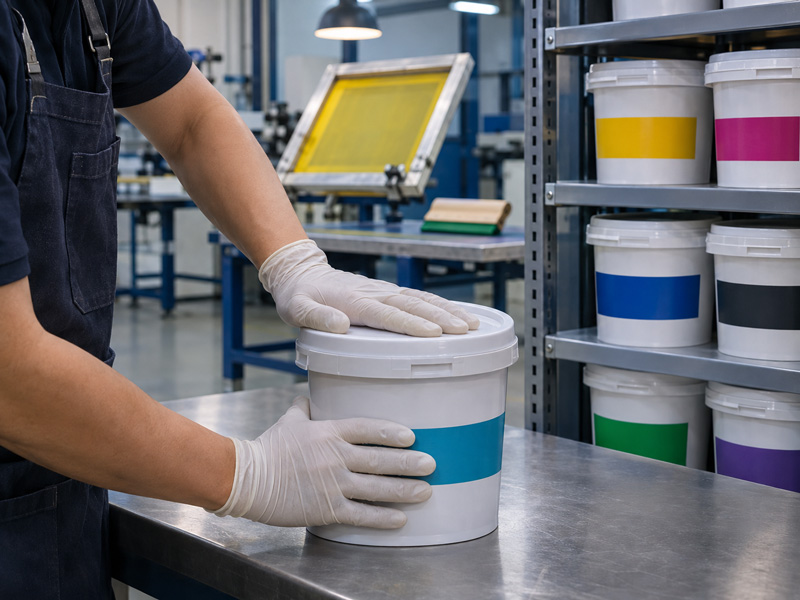
Choose a suitable storage location and keep containers sealed
Store ink containers on shelves in a dry, well-ventilated area with minimal temperature fluctuations. Keep them away from windows that receive direct sunlight, dryers, and other heat sources. In a hot shop, place a thermometer on the ink shelf to check the actual temperature during the hottest part of the day.
Check the storage temperature on the label or in the technical data sheet (TDS) for each ink product. The recommended storage temperature may differ from the working temperature for printing. Consult the product’s safety data sheet (SDS) for ventilation requirements, precautions concerning ignition sources, and storage instructions.
Keep unused ink in its original container. After scooping out ink, wipe the rim clean and reseal the lid immediately. Dried ink on the rim can prevent the lid from sealing properly or flake into the container the next time it is opened. Use a clean, dry ink spatula and clean it before using it with another color.
Storage by ink type
|
Ink type |
What to control |
|
Water-based ink |
Keep the container tightly sealed to limit evaporation and surface skinning. Store within the manufacturer’s recommended temperature range and protect the ink from freezing. Dirty tools and reclaimed ink can introduce microorganisms into the container. |
|
Plastisol ink |
Keep away from direct sunlight and heat sources. Cold ink may thicken temporarily. Bring it to the working temperature specified in the TDS and stir until uniform before assessing viscosity. Prolonged exposure to high temperatures can cause thickening or gelation. |
|
Solvent-based ink |
Reseal the container immediately after scooping out ink to limit solvent loss and changes in viscosity. If an adjustment is needed for printing, use the thinner and mixing ratio specified by the manufacturer. |
|
UV-curable ink |
Keep the ink in its original container or in a compatible, light-blocking container. Close the lid during breaks. Exposure to UV light can cause a skin to form on the ink in the container or on the screen. |
Shelf life and pot life
1. Shelf life
Shelf life applies to ink stored under the conditions specified by the manufacturer. Check the label or TDS to determine when the shelf-life period begins, and record the date the container was opened. When issuing ink from stock, use in-spec batches with the earliest expiration dates first.
2. Pot life
Pot life is the period during which an ink mixture remains usable after a reactive component is added, such as a hardener, catalyst, or discharge activator. Start timing when the components are mixed, following the instructions for the specific ink system. Mark the mixing time and the use-by time on the container.
Mix only enough ink for the work you expect to complete within that period. Once the pot life has expired, remove the leftover ink from the ink supply area. The mixture may still pass through the mesh under the squeegee even after its curing performance, adhesion, or discharge effectiveness has declined.
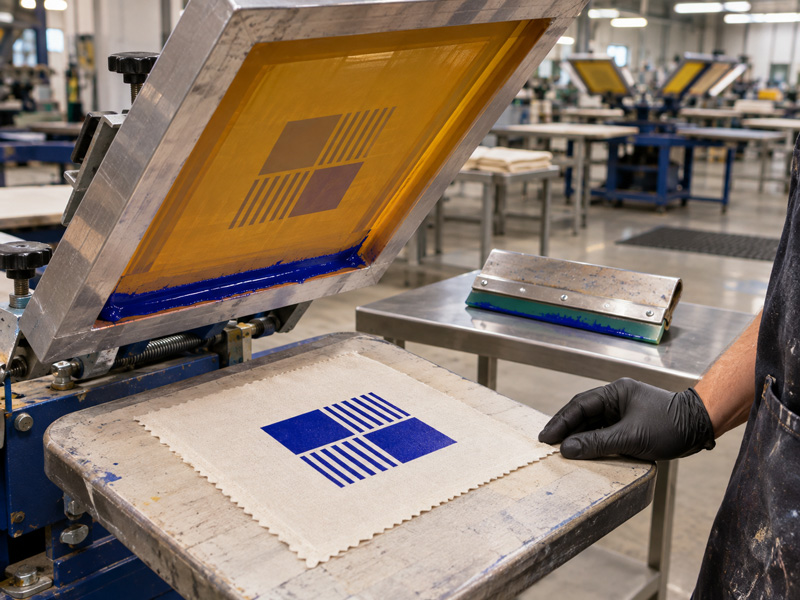
Collect leftover ink in a separate container
Load the screen with only as much ink as needed at each refill. At the end of the shift, if the manufacturer allows reuse and the ink is still within its usable period, use a clean spatula to transfer it into a separate container with a tight-fitting lid. Keep ink recovered from the screen separate from unused ink to prevent lint, dust, dried ink flakes, and cleaning chemicals from contaminating the original batch.
Label the recovery container with the ink code, color, recovery date, and job number. For mixed ink, also record the formulation and additives, plus the mixing time if the mixture has a limited pot life. These details help the shop select the right batch for the next run and trace the cause of any changes in color or durability.
Check the ink before putting it on press
1. Inspect before stirring
Set aside any ink with mold, an unusual odor, gel lumps, or contamination. If dried ink has formed a skin on the surface or around the rim, avoid scraping flakes into the liquid ink.
2. Check uniformity after stirring
Settled pigment may redisperse when stirred. If the ink still shows clumping, phase separation, or abnormal viscosity after it has reached its working temperature, set it aside for further assessment. Adjust viscosity with a compatible additive only after identifying the cause.
3. Test print on the actual substrate
Compare the test print with the approved sample for color, opacity, and edge definition. Check that the ink transfers consistently through the mesh. After drying or curing under the specified conditions, check the performance criteria for the product, such as wash and rub fastness for textiles or adhesion to plastic and metal.
Conclusion
A screen printing ink storage routine starts with keeping containers tightly sealed at the specified temperature, recording mixing times for inks with a limited pot life, collecting leftover ink in separate containers, and test printing before reuse. If color, opacity, or durability varies, the container label helps the shop identify which batch to check before resuming production.
