





Distinguishing plastisol ink and water-based ink in screen printing
Plastisol ink remains workable on the screen during printing and is available in a range of high-opacity formulations. Water-based inks include formulations that produce a thin print with a soft hand and high-solids formulations designed to cover dark fabrics. The two ink systems differ in on-press handling and dryer settings.
A white logo printed on a black cotton shirt needs enough opacity to hide the fabric color while achieving the desired hand feel. When printing the same design on a red polyester shirt, the shop also needs to check whether the fabric dye migrates into the ink film and turns the print pink after curing. Ink selection therefore depends on the fabric, the print requirements, and the capabilities of the production dryer.
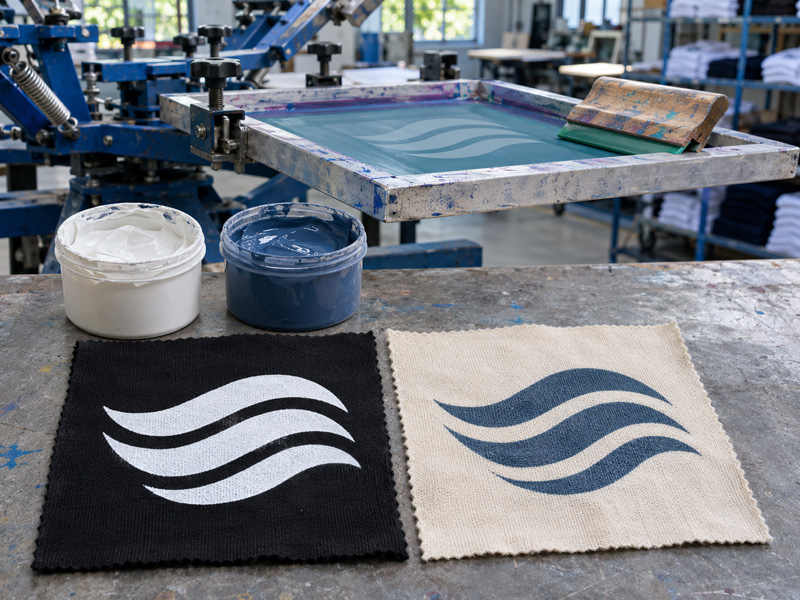
How do plastisol and water-based inks differ?
|
Criterion |
Plastisol ink |
Water-based ink |
|
Composition |
Conventional plastisol consists of PVC resin dispersed in a plasticizer. |
Water serves as the dispersion medium for the binder and other ink components. |
|
On-screen behavior |
Stays workable on the mesh under normal printing conditions, making it easier to pause the press. |
As water evaporates, ink can dry in the mesh openings, particularly in areas with small lettering or halftone dots. |
|
Opacity and hand feel |
Many formulations provide high opacity on dark fabrics. A thicker ink deposit is generally more noticeable to the touch. |
Clear-base formulations suit thin ink deposits on light fabrics. High-solids formulations can provide coverage on dark fabrics. |
|
Curing |
Heat causes the resin and plasticizer to fuse into a continuous ink film. The entire thickness of the ink deposit must meet the curing requirements for the ink. |
Moisture must be removed, and the film-forming or curing conditions specified for the formulation must be met. |
|
Screen cleanup |
Use a screen wash compatible with plastisol ink. |
Many formulations can be washed off with water while still wet. Clean the screen immediately after printing. |
Differences in press operation and drying
1. On the screen
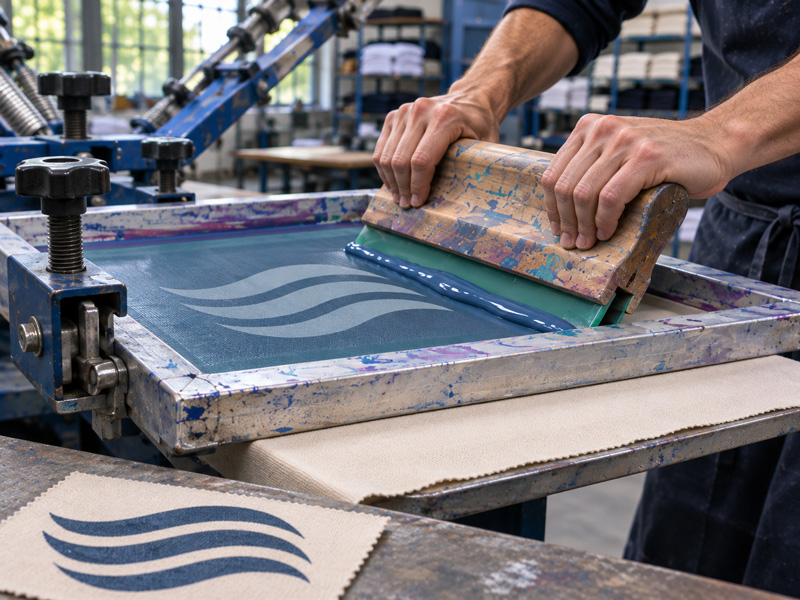
Plastisol is convenient for print runs with frequent stops to change garments, make adjustments, or check samples. With water-based ink, flood the image area during brief stops to keep the ink from drying in the mesh openings. Use a water-resistant stencil emulsion. If longer open time is needed, add a retarder at the rate specified by the ink manufacturer.
2. In the dryer
With plastisol, the dryer setpoint can differ from the actual temperature of the ink deposit. The thicker the deposit, the more important it is to verify that curing conditions are met throughout the ink film. With water-based ink, airflow and dwell time in the dryer chamber determine how effectively moisture is removed. Even when the surface feels dry, the print still needs to complete the curing cycle specified for the ink.
When printing multiple layers, flash drying helps set the freshly printed layer before the next layer is applied. Once all layers have been printed, complete the curing cycle specified in the technical data sheet (TDS) for the ink and verify the result on samples run at the intended production speed.
Choosing ink for the fabric and print requirements
1. Light-colored cotton shirts with large prints that need a soft hand
Test a clear-base water-based ink to achieve a thin deposit. Evaluate the hand feel after curing, since the amount of ink transferred through the mesh affects the thickness of the print.
2. Dark garments that need an opaque white logo
Test a high-opacity white plastisol or a high-solids white water-based ink. When printing light colors on dark fabric, a white underbase can help the top colors appear brighter. Assess both opacity and hand feel, since the number of printed layers affects both.
3. Dyed polyester or blends prone to dye migration
Test an ink specified for the fabric or use a dye-blocking underbase compatible with the ink system. For plastisol, consider a low-cure formulation designed for polyester. Check the print color after curing and again after storing the sample, since dye migration can show up later.
Checking samples before production
Print test samples on fabric from the actual production lot. Use the planned mesh setup, number of print strokes, number of layers, and conveyor speed. Once the samples have cooled, check color, opacity, and hand feel. Wash-test the samples under expected use conditions and check for peeling, cracking, or fading. For stretch fabrics, also check the ink film by pulling the sample in the direction it stretches during use. Record the ink code, fabric lot, and dryer settings for the approved sample so the results can be reproduced in production.
Plastisol is suitable for print runs with frequent stops or jobs that require high opacity. Water-based ink is worth testing when the print needs a soft hand and the drying line can meet the moisture removal and curing requirements. With either ink system, use print and wash tests on fabric from the actual production lot to finalize the ink and dryer settings before running the full order.
